
South Africa, Kenya, Nigeria, Morocco and Egypt are attracting large-scale AI projects worth billions in investment
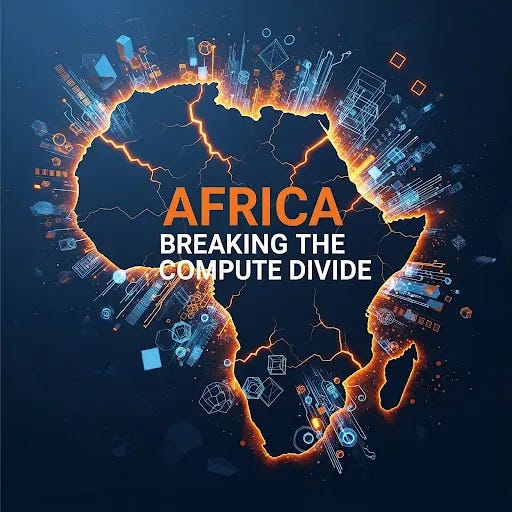
Africa could become the next major frontier for data centers and artificial intelligence, experts say.
The Trump administration is backing and promoting American companies to make AI development, in their words, “the gold standard.”
The U.S. is trying increasingly to grab business opportunities in Africa as backlash and environmental restrictions hit data center development in the U.S. and Africa.
“Africa is emerging as a significant potential location for building AI infrastructure, especially as many mature markets face increasing environmental and power constraints,” Abhishek Goyal, consultant at specialist research group Arizton Advisory & Intelligence, told Fox News Digital.
“The continent could become the next major frontier for AI infrastructure development. As the U.S. and Europe encounter challenges such as power scarcity, grid congestion, permitting issues and environmental regulations, Africa’s underdeveloped infrastructure presents an opportunity rather than a disadvantage.”
A State Department spokesperson told Fox News Digital, “We are committed to ensuring that American AI, including enabling infrastructure like data centers, continues to be the gold standard worldwide and that we remain the partner of choice for foreign governments and businesses who are seeking to upgrade their telecommunications networks and AI capabilities.”
Amongst other deals, this year with U.S. help, an American company has won a $6.2 billion deal in Lesotho in Southern Africa for a data center and hydropower plant.
In the central African country of Gabon, the U.S. Embassy helped win $600 million in business for American companies in 2025. And this year, the embassy in this central African country has assisted in securing a $100 million contract to supply two data centers and a gas-to-power plant in the face of strong competition from China.
Assistant Secretary of State for African Affairs Frank Garcia previously told Fox News Digital, “Under President Trump’s leadership, the United States is assisting U.S. companies to find new markets and flourish in Africa.”
“Africa is experiencing a data center boom, but it begins from a very small base,” Arthur Goldstuck told Fox News Digital. Goldstuck is CEO of South African technology research group World Wide Worx and author of “The Hitchhiker’s Guide to AI – The African Edge.”
Goldstuck said that because of a lack of capacity, “Africa will not replace either market as any kind of center of global computing. Rather, its attraction lies in serving a rapidly growing African cloud market and processing African data closer to the people and businesses that generate it.
He continued, “Africa also gives U.S. companies access to a cloud and AI market that remains severely underserved. The opportunities extend from operating data centers to supplying AI chips, cooling systems, cybersecurity and power infrastructure.
“In some countries, a data center can also become the guaranteed customer that makes a new renewable energy project financially viable. American companies can therefore develop computing capacity and electricity generation together, in partnership with African companies and governments.”
But Goldstuck said data center growth is fueled by local needs on the continent.
“It is a boom by African standards,” he said. “Africa remains far behind the U.S. and Europe in installed capacity, and weak electricity grids make construction and operation more difficult. Demand is growing rapidly as governments, banks and other large companies seek local cloud and AI services. They increasingly want sensitive information stored within their own countries, which adds momentum to the expansion.”
Arizton’s Goyal added that “countries such as South Africa, Kenya, Nigeria, Morocco and Egypt are attracting large-scale (AI) projects.
“The U.S. government aims to offer credible solutions that leverage public and private financing in priority areas, such as emerging technology, which demand that global telecoms networks remain secure for U.S. citizens and business,” a State Department spokesperson said.
“For example, undersea cable networks are being constructed across the Atlantic, providing more opportunity and connectivity to Africa than ever before.”