

POWERING AFRICA’S DIGITAL TRANSFORMATION
The Strategic Role of Electricity, Grid Connectivity, and Energy Infrastructure in Africa’s Digital Future
Africa stands at a critical stage in its digital transformation. The expansion of artificial intelligence, cloud computing, data centres, digital financial services, telecommunications, and smart infrastructure is creating new opportunities for economic development and innovation. However, the success of this transformation depends on a fundamental requirement: reliable, affordable, and scalable electricity infrastructure. Power generation, transmission networks, electricity distribution, and digital connectivity are not separate development priorities. They are interconnected foundations of a modern economy.
The International Energy Agency (IEA) estimates that nearly 600 million people in Africa still lack access to electricity, while reaching universal access in sub-Saharan Africa by 2035 would require approximately $15 billion in annual investment under its ACCESS scenario. At the same time, emerging digital infrastructure—including AI-focused data centres—is increasing the importance of energy planning. A World Economic Forum article published in July 2026 cited McKinsey estimates that African data centre electricity demand could increase from 0.4 GW to 2.2 GW by 2030.
Africa’s Digital Transformation: An Infrastructure Imperative
Digital transformation is reshaping how African societies and businesses operate. Mobile banking, e-commerce, digital healthcare, online education, cloud services, and AI-powered applications are becoming increasingly important to economic participation.
A digital economy requires a combination of: Reliable electricity. Power generation, backup capacity, and dependable supply; Grid connectivity. Transmission and distribution networks that deliver electricity to users; Digital connectivity. Fibre-optic networks, mobile infrastructure, and internet exchanges.. Computing infrastructure. Data centres, cloud platforms, and digital processing capacity; and Resilience and security. Reliable operations, cybersecurity, and infrastructure protection.
Strategic insight: Expanding digital services without strengthening the energy systems that support them can create infrastructure bottlenecks, higher operational costs, and unequal access to digital opportunities.
The Electricity Access Challenge
A persistent barrier to inclusive development
Electricity access remains uneven across Africa, particularly in rural and underserved communities. The IEA’s 2025 Financing Electricity Access in Africa report identifies inadequate financing as a major obstacle and estimates that around 600 million people across Africa live without electricity. This challenge affects digital transformation in several ways:
- Communities without dependable electricity face barriers to using digital devices and services.
- Businesses may experience higher costs from backup power requirements.
- Schools and healthcare facilities can face limitations in deploying digital systems.
- Telecom operators and digital infrastructure providers must account for power reliability in network expansion.
Electricity access should therefore be considered both an energy development objective and an enabler of broader economic participation.
Financing the access gap
The IEA’s ACCESS scenario estimates that approximately $150 billion in cumulative investment—around $15 billion annually—is needed to achieve universal electricity access in sub-Saharan Africa by 2035. The scenario includes grid expansion, mini-grids, and standalone solar systems.
Grid Connectivity: The Backbone of Digital Infrastructure
Why generation alone is insufficient
A country can possess substantial electricity generation potential while still experiencing unreliable or limited electricity access.. The complete electricity system requires:
- GenerationPower plants, solar facilities, wind farms, hydroelectric systems, and other sources produce electricity.
- TransmissionHigh-voltage networks transport electricity across distances and between regions.
- DistributionLocal networks deliver electricity to homes, businesses, public institutions, and infrastructure facilities.
- Last-mile accessConnections and service delivery ensure that electricity reaches intended users.
Weaknesses in any of these stages can limit the value of additional generation capacity.
Regional power integration
Regional electricity cooperation is receiving renewed attention in 2026. In June, the World Bank Group announced a $1.6 billion financing package for the Regional Energy Transmission, Trade & Decarbonization program for Eastern Africa (RETRADE-EA). The programme aims to strengthen cross-border power trade, system resilience, regional planning, and institutional capacity.
In July 2026, the African Union reported progress on implementing the African Single Electricity Market, with a focus on integrated, competitive, secure, and sustainable electricity systems. Regional interconnections can support electricity trading and more coordinated system planning. Their effectiveness, however, depends on infrastructure investment, operational coordination, regulation, and country-specific conditions.
Data Centres and the Emerging AI Energy Demand
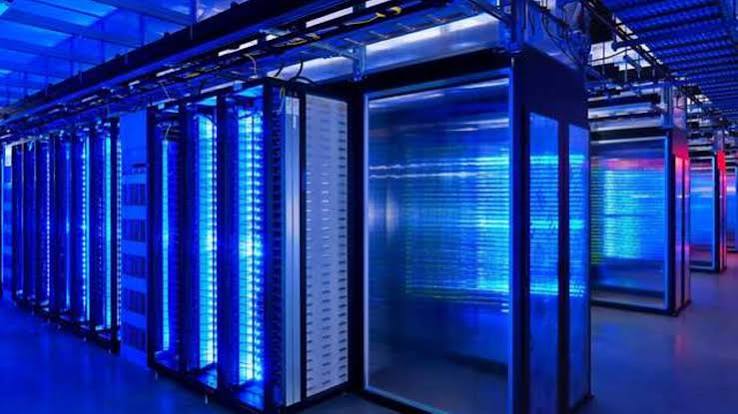
Artificial intelligence is changing the scale and nature of digital infrastructure requirements. AI workloads require computing resources, cooling, networking, and electricity. As more countries seek to develop local data centres and digital services, energy availability becomes an important factor in infrastructure planning. The World Economic Forum reported in July 2026 that African data centre electricity demand could rise from 0.4 GW to 2.2 GW by 2030, based on McKinsey estimates. This is a forecast rather than a guaranteed outcome, and actual demand will depend on deployment, utilization, energy efficiency, and market conditions.
Infrastructure implications
| Requirement | Strategic consideration |
|---|---|
| Power supply | Adequate capacity and dependable delivery |
| Grid connection | Transmission and distribution availability |
| Cooling | Efficient systems and suitable environmental conditions |
| Backup power | Resilience during supply interruptions |
| Sustainability | Renewable energy integration and emissions management |
| Network access | Low-latency fibre and telecommunications infrastructure |
Key publication insight: The expansion of AI infrastructure makes coordination between energy planners, data centre developers, utilities, and telecommunications operators increasingly relevant.