


Kenya has begun deploying the seed capital of its new National Infrastructure Fund, establishing a major financing vehicle intended to support commercially viable infrastructure projects across energy, ICT, transport, water and agriculture.
Kenya has begun deploying the initial capital of its National Infrastructure Fund, a move expected to strengthen the country’s capacity to finance large-scale infrastructure projects and attract additional private-sector investment.
The fund has a seed capital of approximately KSh340 billion ($2.62 billion). Its initial deployment includes investments in domestic government bonds, with the broader objective of using the fund as a platform to mobilise significantly larger amounts of capital for infrastructure development.
According to reporting by Reuters, the fund aims to mobilise as much as KSh3.6 trillion over the next decade through a combination of co-investments and debt.
Energy among priority sectors
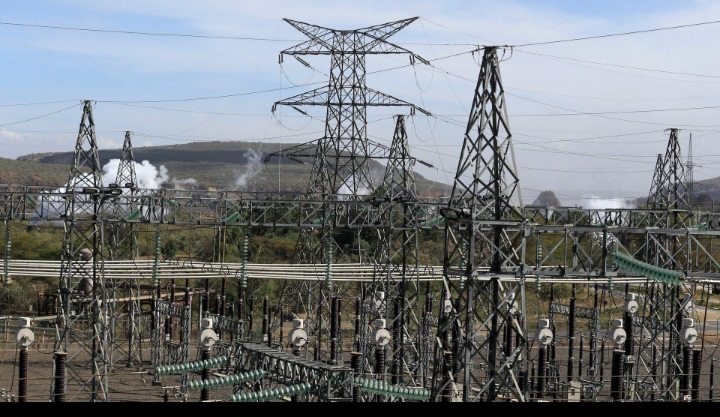
Energy is one of the sectors expected to benefit from the infrastructure financing programme. Kenya is continuing to expand and modernise its electricity system as demand grows across households, businesses and industry. The country has also been investing in renewable generation, transmission infrastructure and measures intended to improve electricity access and reliability.
Additional infrastructure financing could support the development of new power-generation projects and associated infrastructure, while helping attract institutional and private investors into commercially viable projects. The availability of long-term capital is particularly important for energy infrastructure because generation, transmission and distribution projects often require substantial upfront investment and extended development periods.
ICT infrastructure also targeted
The fund’s mandate extends beyond traditional infrastructure, with information and communications technology (ICT) identified among the sectors targeted for investment.
Kenya has established itself as one of East Africa’s leading technology markets, supported by widespread mobile connectivity, digital financial services and a growing technology ecosystem.
At the same time, demand for digital infrastructure is increasing. Data centres, cloud services, telecommunications networks and other digital infrastructure require significant investment in both physical facilities and supporting electricity systems.
As artificial intelligence and cloud computing expand globally, access to reliable power and high-quality digital infrastructure is becoming increasingly important to countries seeking to attract technology investment.
For Kenya, investment in energy and ICT infrastructure could therefore have a reinforcing effect, allowing improvements in electricity availability to support digital infrastructure while the growth of digital services creates additional demand for reliable power.
Mobilising private capital
A key objective of the National Infrastructure Fund is to use public capital to attract additional private-sector financing.
Rather than relying entirely on government resources, the fund is expected to participate in projects alongside private investors and use debt financing to increase the overall amount of capital available for infrastructure.
This approach could be particularly important at a time when governments across emerging markets face constraints on public spending and rising borrowing costs. Infrastructure funds can provide a mechanism for directing capital towards projects capable of generating long-term commercial returns while supporting national development priorities.
Kenya’s infrastructure financing challenge
Kenya has significant infrastructure requirements across electricity, transport, water and digital connectivity.
The country is also seeking to position itself as a regional hub for technology, logistics and investment. Achieving that ambition will require continued expansion of supporting infrastructure.
In the power sector, this includes generation capacity as well as transmission and distribution networks capable of delivering electricity to growing industrial and commercial centres.
For digital infrastructure, investment will be required not only in data centres but also in connectivity, fibre networks, telecommunications infrastructure and reliable power supplies.
The infrastructure fund could therefore become an important mechanism for coordinating investment across sectors that are increasingly interconnected.
Implications for Africa’s infrastructure market
Kenya’s initiative comes amid growing efforts across Africa to develop new financing models for infrastructure.
African economies require substantial investment to close infrastructure gaps while supporting industrialisation, urbanisation and the expansion of digital services.
Energy remains particularly important. Reliable electricity is a prerequisite for manufacturing, telecommunications, data centres and other modern industries.
The development of large infrastructure funds and public-private investment structures could help African countries mobilise capital beyond traditional government budgets and development-finance institutions.
For Kenya, the effectiveness of the National Infrastructure Fund will ultimately depend on the quality of projects selected, the transparency of investment decisions and its ability to attract additional long-term capital. If successfully implemented, however, the fund could become an important source of financing for the country’s next generation of energy and digital infrastructure projects.