

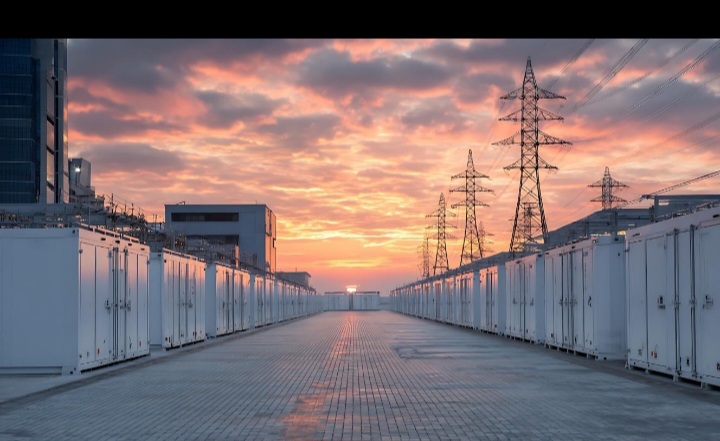
South Africa is moving to accelerate investment in battery energy storage and gas-to-power projects as the country seeks to strengthen electricity reliability and build greater flexibility into its power system.
South Africa is prioritising the development of 9.6 gigawatts (GW) of battery storage and gas-to-power capacity, according to the country’s electricity minister, as the government works to reinforce the electricity system and support a more flexible generation mix.
The planned capacity represents a significant expansion of flexible power infrastructure at a time when South Africa is continuing to reshape its electricity sector and increase investment in new generation.
Battery storage becomes increasingly important
Battery energy storage is becoming an increasingly important component of modern electricity systems.
As South Africa expands renewable generation, particularly solar and wind, the ability to store electricity and release it when required is becoming more valuable. Battery systems can absorb electricity when generation is high and discharge it during periods of increased demand or lower renewable output.
Storage can also provide rapid-response services to the electricity system, helping manage fluctuations and supporting grid stability.
For South Africa, the development of large-scale battery projects could therefore complement renewable generation while reducing pressure on conventional power assets during periods of peak demand.
Gas-to-power adds dispatchable capacity
The government’s plans also place significant emphasis on gas-to-power.
Gas-fired generation can provide electricity when required and can complement variable renewable generation. This makes it particularly relevant as electricity systems incorporate increasing amounts of solar and wind capacity.
The combination of gas generation and battery storage offers different forms of flexibility.
Battery systems can respond rapidly to short-term changes in electricity demand and supply, while gas-fired plants can provide longer-duration generation when additional power is required.
This combination is increasingly being considered by electricity markets seeking to balance reliability, affordability and the transition towards lower-carbon generation.
Investment opportunities across the power sector
The planned 9.6 GW expansion could create opportunities across a wide range of technologies and services.
These include battery energy storage systems, gas turbines, power-generation equipment, engineering and construction services, grid infrastructure, energy-management systems and associated transmission and distribution projects.
The scale of the proposed capacity also highlights the growing need for private capital in Africa’s electricity sector.
Large power projects require substantial upfront investment and long development timelines. Governments are therefore increasingly looking to independent power producers, infrastructure investors and technology companies to participate in the development of new capacity.
South Africa’s wider electricity transition
South Africa remains one of the continent’s largest and most strategically important electricity markets.
The country has been working to improve the reliability of its electricity system while reducing its dependence on ageing coal-fired generation and increasing the contribution of renewable energy.
That transition is creating a growing requirement for technologies that can provide flexibility and reliability.
Battery storage and gas-to-power are therefore becoming important parts of the discussion around the country’s future electricity mix.
Implications for Africa
South Africa’s approach is also significant for other African markets facing similar challenges.
Across the continent, electricity demand is expected to increase as economies industrialise, populations urbanise and digital infrastructure expands.
The growth of data centres, telecommunications infrastructure, manufacturing and other energy-intensive industries is creating additional demand for reliable electricity.
At the same time, many African countries have significant renewable-energy potential but face challenges related to grid capacity, financing and system flexibility.
The development of battery storage alongside dispatchable generation could provide one pathway for addressing these challenges.
For investors and energy companies, South Africa’s planned expansion demonstrates the growing size of Africa’s market for flexible power infrastructure.
The success of these projects will ultimately depend on financing, project execution, grid connections and the ability to bring new capacity online efficiently.
But with the country targeting 9.6 GW of battery storage and gas-to-power capacity, South Africa is signalling that flexible generation and energy storage will play an increasingly important role in its electricity future.