

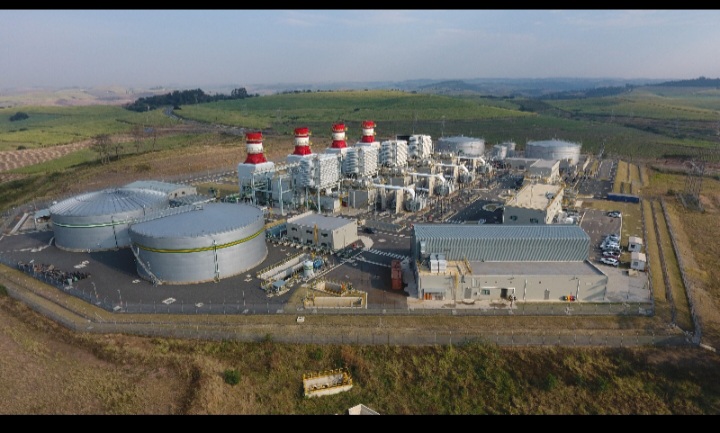
South Africa is moving to accelerate the development of battery energy storage and gas-to-power projects as the country seeks to strengthen electricity reliability and add greater flexibility to its power system.
South Africa plans to prioritise the development of 9.6 gigawatts (GW) of battery storage and gas-to-power capacity, according to the country’s electricity minister, as authorities work to strengthen the country’s electricity supply and support a more flexible power system.
The planned projects form part of broader efforts to diversify South Africa’s electricity mix and improve the ability of the grid to respond to changing demand and generation conditions.
Storage emerges as a key part of the power system
Battery energy storage is increasingly being considered an important component of modern electricity systems, particularly as countries expand variable renewable generation such as solar and wind.
Unlike conventional generation, solar and wind output changes according to weather and time of day. Battery systems can store electricity when supply is high and release it when demand increases or renewable generation falls.
For South Africa, which has been working to improve electricity-system reliability, additional storage capacity could provide greater flexibility while supporting the integration of renewable energy into the grid.
The planned investment also reflects a broader shift in African power markets, where energy storage is increasingly being considered alongside conventional generation and transmission infrastructure.
Gas-to-power remains part of the strategy
Alongside battery storage, South Africa is prioritising gas-to-power projects.
Gas-fired generation can provide dispatchable electricity, allowing power to be generated when required rather than depending on weather conditions. This flexibility can be particularly valuable in electricity systems with growing shares of intermittent renewable generation.
The combination of gas generation and battery storage could therefore provide different forms of flexibility: batteries can respond rapidly to short-term changes in the system, while gas-fired plants can provide longer-duration generation when required.
The government’s approach highlights the continuing role of natural gas in discussions around South Africa’s electricity transition, even as the country expands renewable energy.
Investment and infrastructure remain critical
Developing 9.6 GW of additional storage and gas-to-power capacity will require significant investment in generation facilities, grid connections and associated infrastructure.
The projects also come as South Africa continues to reshape its electricity sector and attract private investment into new generation capacity.
For investors and technology providers, the planned expansion creates potential opportunities across the wider power-value chain, including battery systems, gas turbines, engineering and construction, grid infrastructure, controls and energy-management technologies.
The scale of the proposed capacity also underlines the growing importance of flexible power infrastructure as electricity systems respond to changing demand patterns.
A wider African trend
South Africa’s plans are significant beyond its domestic electricity market. Across Africa, governments are increasingly looking at combinations of renewable energy, gas-fired generation, battery storage and transmission investment to address electricity shortages and improve reliability.
The continent’s growing industrialisation, urbanisation and digital economy are also expected to increase demand for dependable electricity.
Data centres, telecommunications infrastructure, manufacturing facilities and other energy-intensive industries require stable power supplies, increasing the importance of both generation capacity and grid resilience.
South Africa’s decision to prioritise battery storage and gas-to-power therefore reflects a wider challenge facing African electricity markets: how to expand generation while ensuring that power remains reliable, flexible and capable of supporting economic growth.
The success of the programme will ultimately depend on project execution, financing, grid capacity and the ability to bring new generation and storage assets online at the required pace.