

HERCULES™: Intelligent Power Infrastructure for the AI Era
Solving the Energy-to-Compute Challenge Through End-to-End Power Train Intelligence
A strategic report on global AI data-centre infrastructure, power reliability, grid efficiency, dynamic load balancing and the opportunity for Africa
Executive Perspective
Artificial intelligence is transforming the economics of digital infrastructure. The next generation of AI data centres will not be defined by computing capacity alone, but by their ability to secure, convert, distribute and intelligently manage enormous quantities of electrical power while maintaining continuous operation.
The fundamental challenge is systemic. AI infrastructure requires a dependable energy source, sufficient generation capacity, robust electrical infrastructure, rapid responses to changing loads, advanced cooling, effective power management and reliable delivery of electricity to increasingly dense computing systems. A weakness at any point in this chain can undermine the performance of the entire facility.
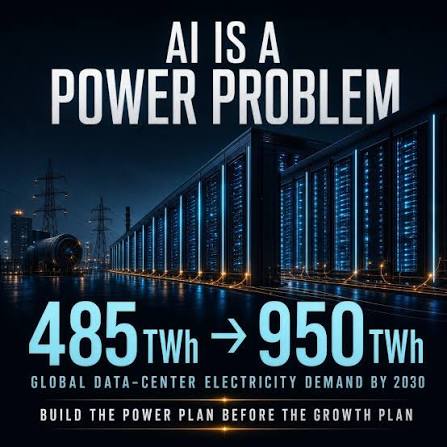
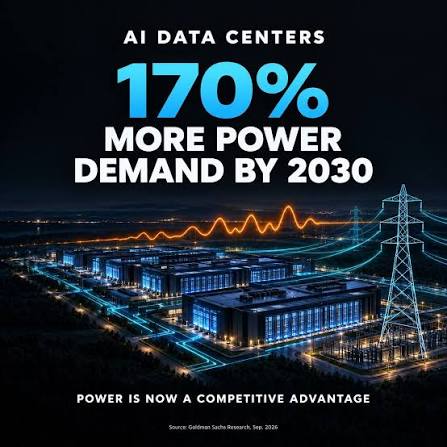
The International Energy Agency’s 2025 Energy and AI report projects that global data-centre electricity consumption could reach approximately 945 terawatt-hours annually by 2030 under its base-case scenario, more than double the estimated 2024 level. The report also identifies accelerated computing as a major driver of demand growth. These projections make energy infrastructure a strategic consideration for AI investment, rather than simply an engineering requirement. Source: IEA, Energy and AI.
HERCULES™ is positioned around this challenge. Its core differentiator is intelligent, end-to-end control of the power train, extending from fuel and energy inputs through generation, power conversion and distribution, intelligent power management, and ultimately AI utilization.
The strategic proposition is that power infrastructure should be designed and operated as one coordinated system, rather than as a collection of independently optimized components. By integrating visibility and control across the energy-to-compute chain, HERCULES™ aims to improve operational resilience, coordinate power supply with rapidly changing computing demand, and support reliable 24/7 operation for ultra-high-density AI workloads.
This is particularly relevant to Africa, where the opportunity to develop advanced digital infrastructure intersects with persistent challenges in electricity access, grid capacity, investment and energy reliability. The continent does not have a single energy profile: conditions differ significantly between countries, regions and individual sites. Nevertheless, appropriately designed, locally adaptable power infrastructure could help enable new AI facilities without making their viability entirely dependent on the strength of an existing public grid.
HERCULES™ should therefore be understood as a proposed integrated infrastructure and control approach whose value must be established through engineering validation, operational testing and project-specific economics. Its potential lies in addressing several connected constraints together, rather than promising that one technology can eliminate every limitation of the energy system.
1. The New Infrastructure Reality: AI Is an Energy-System Challenge
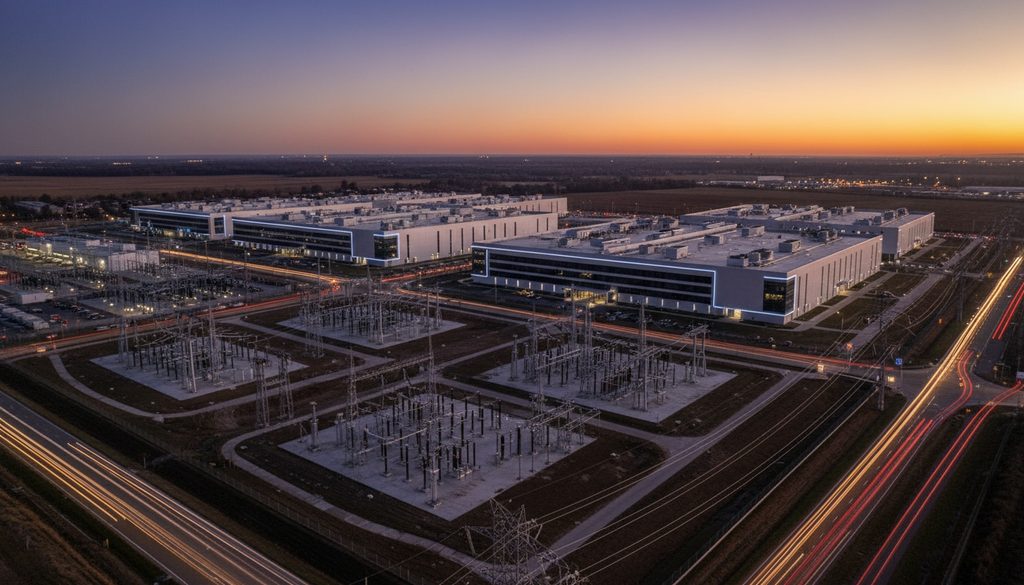
Conventional data-centre design has long focused on availability, electrical redundancy, cooling efficiency and the reliable operation of servers. AI changes the scale and, in important cases, the dynamic behaviour of this infrastructure.
Large AI training and inference systems can concentrate substantial computing capacity within relatively small physical footprints. Accelerators, high-speed interconnects, memory systems and associated cooling equipment create a tightly coupled electrical and thermal environment. As compute density increases, the facility must deliver more power through constrained spaces while maintaining acceptable temperatures, voltage quality and operational margins.
The IEA estimates that servers account for around 60% of electricity consumption in modern data centres on average, although the proportion varies by facility. Cooling and other supporting infrastructure account for additional demand. Consequently, the electricity requirement of an AI campus extends beyond the rated power of its computing hardware. The complete facility must accommodate electrical conversion losses, cooling, networking, storage, controls and other auxiliary loads. Source: IEA, Energy and AI.
This creates a fundamental distinction between installing computing capacity and operating it productively. A facility may have sufficient servers but inadequate electrical capacity, insufficient cooling headroom, weak power quality or an unreliable upstream supply. In those circumstances, nominal computing capacity does not translate automatically into dependable, economically useful AI output.
The infrastructure objective must therefore shift from supplying electricity in isolation to delivering the right quantity and quality of power, at the right time, to the right computing load, with appropriate resilience and acceptable total cost.
2. The Core Problems Across the Power Value Chain
2.1 Power availability and security of supply
The first challenge is securing enough dependable power to support continuous operation. AI data centres cannot assume that the availability of a grid connection guarantees that the required capacity will be delivered consistently, particularly during peak demand, network disturbances or periods of constrained generation.
In established data-centre markets, developers increasingly face competition for grid connections, lengthy infrastructure upgrades and uncertainty over when additional capacity will become available. The IEA warns that electricity grids risk becoming a bottleneck as electricity demand and the deployment of new generation resources increase. Uptime Institute’s 2025 industry survey likewise identifies worsening power constraints and rising costs among the major challenges facing data-centre operators. Sources: IEA, Electricity Grids and Secure Energy Transitions; Uptime Institute, Global Data Center Survey 2025.
The challenge is more complex than securing a large contracted supply. The operator must consider the quality of that supply, the consequences of interruptions, the response of backup systems, the availability of fuel and the ability to transition between sources without compromising critical loads.
A robust design may combine grid electricity, on-site generation, energy storage and other suitable resources. However, adding multiple sources does not automatically create an integrated resilient system. Their contribution depends on electrical architecture, control coordination, protection systems, operating procedures and the availability of each resource when required.
The underlying problem is fragmentation: generation, backup power, storage, distribution and computing loads may be managed through separate systems that do not share a sufficiently coordinated operational view.
2.2 Grid losses, conversion losses and the cost of delivered power
Electricity must travel through a chain of infrastructure before it reaches an AI accelerator. Depending on the architecture, that chain includes transmission and distribution networks, transformers, switchgear, uninterruptible power supplies, power conversion equipment and rack-level power supplies.
Each stage introduces engineering constraints and, in many cases, electrical losses. Resistive losses in conductors depend on current and resistance; transformers and conversion equipment have their own efficiency characteristics. The losses within a data centre must be distinguished from transmission and distribution losses in the external electricity network, since they occur in different places and require different interventions.
The commercial consequence is straightforward. The cost of energy purchased or generated is not the same as the cost of useful electricity delivered to computing equipment. Losses mean that more energy must enter the system than ultimately reaches the IT load. Additional equipment also requires capital investment, space, maintenance and thermal management.
A useful operational objective is to measure energy at successive points along the power train and identify where avoidable losses arise. This requires consistent metering, reliable telemetry, appropriate performance indicators and the ability to act on the information.
HERCULES™ can be positioned to support this objective through integrated monitoring and optimization across the power train. Its value would be demonstrated by measured improvements in conversion efficiency, auxiliary consumption, delivered power cost or useful computing output per unit of energy. Such improvements should be quantified against an established baseline rather than assumed from the presence of an integrated control platform alone.
2.3 Ultra-high-power density: more computing power in less space
AI infrastructure is placing increasing demands on electrical distribution and thermal management within individual racks and across entire halls. Higher rack density can reduce the physical footprint required for a given amount of compute, but it also increases the concentration of electrical and thermal load.
Uptime Institute’s 2025 survey reported increasing adoption of rack densities in the 10–30 kW range, while its research on AI infrastructure documented a growing share of AI training deployments above 50 kW per rack. Actual requirements vary substantially by workload, hardware generation and facility design. Sources: Uptime Institute, Global Data Center Survey 2025 and AI Infrastructure Survey 2025.
At these densities, electrical design cannot be separated from cooling design. Power delivery equipment must support the expected current, protection requirements and transient conditions. Cooling systems must remove the resulting heat while maintaining suitable operating conditions for computing hardware. Physical space, cable routing, busway capacity, redundancy and maintenance access become increasingly important.
A design that satisfies average demand may still be inadequate during peak operating conditions or when equipment is unavailable for maintenance. Similarly, the loss of a cooling component or a distribution path can have a disproportionately large impact when a large amount of compute is concentrated in a small area.
The solution requires coordinated engineering across the rack, row, data hall and campus. Power capacity, cooling capacity, electrical protection, redundancy and operational controls must be designed around the same workload assumptions.
HERCULES™ addresses this issue conceptually by connecting the upstream energy system to the actual requirements of the AI environment. A coordinated architecture could help operators align available supply with rack demand, monitor capacity constraints and avoid operating decisions that create unnecessary electrical or thermal stress. Achieving these outcomes, however, also requires suitable power distribution hardware, cooling infrastructure and protection systems.
2.4 Dynamic power response: AI workloads are not electrically static
One of the less visible challenges is the dynamic behaviour of large AI workloads. Computing demand is not always a smooth, constant electrical load. Training processes, synchronization events, workload scheduling and accelerator activity can create rapid changes in power consumption.
Uptime Institute has specifically highlighted the potential for step-load-related power-quality issues in large AI clusters. These changes can challenge the electrical response of power distribution systems and make it important to evaluate not only steady-state capacity but also transient behaviour. Source: Uptime Institute, “Electrical considerations with large AI compute,” November 2025.
The distinction between energy and power is critical. Energy describes consumption over time, whereas power describes the instantaneous rate of energy use. A facility may have enough generation capacity in aggregate yet still experience difficulty responding to a rapid change in demand if its generators, converters, storage systems or control mechanisms cannot respond appropriately.
A large change in load can affect voltage and frequency, depending on the electrical topology and the strength of the connected system. It can also influence generator loading, battery dispatch, converter operation and the stability margins of the facility. The exact response depends on equipment characteristics and the way the systems are interconnected.
Effective power management therefore requires visibility into changing demand, accurate forecasts where practical, and coordinated control actions at the appropriate timescale. Fast electrical disturbances may require hardware-level responses within milliseconds or cycles, while supervisory energy management can coordinate dispatch, reserve margins and operating schedules over longer intervals.
These are different control layers. A supervisory platform cannot replace fast protective devices, generator governors, inverter controls or properly engineered electrical systems. Instead, it should coordinate with them through validated interfaces and defined operating limits.
HERCULES™ can be positioned as the supervisory intelligence connecting power availability and computing demand, with the objective of making the entire system more responsive, predictable and resilient.
2.5 Power balancing: matching supply, storage, cooling and compute
Power balancing becomes increasingly important when a facility combines multiple generation sources, energy storage, variable renewable generation and highly dynamic AI workloads.
The challenge is not simply to maintain a numerical balance between generation and consumption. The system must also maintain adequate reserves, respect equipment operating limits, preserve power quality and ensure that critical computing loads remain protected during disturbances.
For example, solar generation may reduce energy costs during suitable periods but cannot independently guarantee continuous supply through the night or during low-generation conditions. Battery storage can provide rapid response and bridge interruptions, but its contribution is constrained by power rating, stored energy, state of charge, degradation and recharge opportunities. Dispatchable generation can provide another layer of support, but its response characteristics, fuel availability, maintenance requirements and emissions must be considered.
A properly designed hybrid system must coordinate these resources according to their capabilities. It must determine when to use available generation, when to charge or discharge storage, when to retain operating reserves, and when to adjust flexible computing demand if such flexibility is available and commercially acceptable.
This requires a control strategy that considers both immediate electrical stability and longer-term energy economics. It must also account for the consequences of a control action: reducing one load may protect a critical service, but it may also delay a training run or affect service-level commitments.
The HERCULES™ proposition is to treat these decisions as connected elements of one power-to-compute management problem, rather than separate decisions made by independent subsystems.
2.6 Reliability, redundancy and the cost of interruption
For AI infrastructure, reliability is a commercial and operational requirement. An interruption can affect computing availability, workload completion, service commitments and the utilization of expensive hardware. The economic impact depends on the workload, recovery time, system design and whether interrupted processes can resume efficiently.
Redundancy is essential in many designs, but duplicated equipment alone does not guarantee resilience. Shared upstream dependencies, control failures, fuel constraints, inadequate maintenance and common-mode events can defeat otherwise redundant arrangements.
A resilient facility therefore needs coordinated protection, fault isolation, monitoring, maintenance planning, tested recovery procedures and clear operating responsibilities. The design must also establish which loads are critical, which loads can tolerate interruption, and which workloads may be shifted or paused under defined conditions.
An intelligent control layer can improve the operator’s ability to identify developing problems, understand the consequences of a disturbance and coordinate the response. Predictive maintenance, alarm correlation, power-flow visibility and automated operating sequences can contribute to reliability when validated and implemented with suitable safeguards.
For HERCULES™, the appropriate objective is not an unqualified promise of uninterrupted operation. It is a measurable improvement in the ability to maintain service through foreseeable disturbances, supported by engineered redundancy, proven controls, operational discipline and independently verifiable performance.
3. HERCULES™: An Integrated Solution Across the Energy-to-Compute Chain
HERCULES™ is differentiated by its intended system-level perspective. Instead of treating fuel supply, power generation, electrical distribution, power management and AI workloads as separate operational domains, it places them within a unified control and optimization framework.
The purpose is to coordinate the entire journey from the primary energy source to useful computing output. This is important because an improvement at one stage can create constraints elsewhere. Increasing generation capacity without improving distribution may not increase usable compute. Adding batteries without coordinating dispatch may fail to capture their full operational value. Increasing rack density without matching cooling and electrical capacity can reduce resilience rather than improve performance.
An end-to-end approach seeks to make the parts work together according to common objectives: availability, power quality, efficiency, cost, responsiveness and workload requirements.
3.1 Fuel and energy inputs: building a dependable foundation
The first stage concerns the availability and management of the energy resources supporting the facility. Depending on the site, these may include grid electricity, natural gas or other suitable fuels, renewable generation, or a combination of resources.
The design should assess the reliability of each source, its delivered cost, supply-chain dependencies, environmental impacts and contribution to resilience. Where on-site generation is used, fuel storage, replenishment arrangements, emissions controls, maintenance and local permitting may be decisive factors.
HERCULES™ can provide the architectural basis for incorporating energy availability and source status into a broader operational view. This would allow the generation and management strategy to be informed by the actual conditions affecting supply rather than by isolated equipment status alone.
3.2 Power generation: converting available energy into dependable supply
The second stage concerns the generation capacity required to meet the facility’s electrical demand. The appropriate configuration depends on scale, location, fuel access, grid quality, environmental requirements and the required level of redundancy.
A grid-connected campus may use utility supply as its primary source and on-site generation as backup or supplementary capacity. A site with a constrained or unreliable grid may require a more substantial microgrid architecture, potentially incorporating dispatchable generation, renewable energy and storage.
HERCULES™ is intended to coordinate generation with facility requirements and operating priorities. Depending on the implemented equipment and control interfaces, this could include generation monitoring, dispatch coordination, reserve management and the sequencing of operating modes.
The critical distinction is between installing generation and managing generation as part of an integrated system. The latter requires accurate data, compatible controls, validated operating sequences and clear limits on what the supervisory system is permitted to command.
3.3 Power conversion and distribution: delivering usable electricity
Generated or imported electricity must be converted and distributed at the appropriate voltage, frequency and power quality for the facility’s equipment.
This stage encompasses transformers, switchgear, protection systems, uninterruptible power supplies, converters, distribution pathways and rack-level power delivery. Its performance directly influences efficiency, resilience and the amount of usable power that reaches the IT load.
HERCULES™ can be designed to integrate relevant telemetry from these systems, giving operators visibility into electrical loading, equipment status, capacity margins and measured losses. With suitable interfaces, such information can inform operating decisions across generation, storage and computing demand.
The purpose is to improve coordination and visibility without compromising the independence of protection systems or the engineering requirements of individual components.
3.4 Intelligent power management: the coordinating layer
This is the central element of the HERCULES™ value proposition.
Intelligent power management connects the available energy resources to the actual and anticipated needs of the data centre. It brings together information about generation, grid conditions, storage, electrical distribution, cooling demand and IT workloads, allowing decisions to be assessed against the facility’s overall operating objectives.
A well-engineered implementation could coordinate dispatchable generation and storage, monitor reserve margins, identify approaching capacity constraints, detect abnormal operating conditions and support decisions about when flexible loads should change their consumption.
It could also improve energy accounting by relating power entering the facility to energy delivered to computing equipment and to the useful work performed. Such measurements would allow operators to assess performance using consistent metrics rather than relying solely on equipment-level efficiency ratings.
The control architecture should be hierarchical. Fast local controls and protective devices must continue to handle time-critical electrical functions, while the supervisory layer coordinates resources and optimizes operation within validated limits. Cybersecurity, access control, fail-safe operating modes and human oversight are necessary elements of the design.
The result sought is an infrastructure system that responds to changing conditions as a coordinated whole.
3.5 AI compute and utilization: connecting energy to productive output
The final stage is the computing environment itself. The purpose of the upstream energy system is not merely to deliver electricity; it is to support the reliable and economically productive operation of AI workloads.
This requires the power system to understand the operational requirements of the IT environment, including criticality, expected demand, cooling requirements and the consequences of load changes. Where workload orchestration supports it, computing demand may be scheduled or adjusted to accommodate energy availability, storage constraints or defined operating limits.
Not every AI workload can be interrupted, shifted or rescheduled without consequence. Real-time inference, latency-sensitive services and contractual service commitments may require strict continuity. Large training jobs may offer different forms of scheduling flexibility, depending on the application and recovery architecture.
HERCULES™ should therefore link energy optimization to workload requirements without assuming that all computing demand is flexible. Its long-term objective is to improve the relationship between available power and useful AI output while protecting the reliability commitments of the facility.
4. The HERCULES™ Operating Principle: One Coordinated Value Chain
The underlying architecture can be expressed as a continuous sequence of energy conversion and control.
Fuel and energy inputs → Power generation → Power conversion and distribution → Intelligent power management → AI compute and utilization.
The distinctive feature is the control relationship connecting all five stages. Information about computing demand should inform upstream energy decisions, while information about energy availability and electrical constraints should inform decisions at the computing level where flexibility exists.
This creates a two-way relationship between power supply and AI utilization. Energy moves toward the computing load; operational information and control decisions move across the chain to help align supply with demand.
The intended result is a more coherent operating system for critical digital infrastructure, with reliability, power quality, efficiency and cost considered together.
The proposition is especially important for markets in which the quality and availability of electricity can determine whether a data-centre investment is commercially viable in the first place.
5.1 Moving beyond dependence on the conventional grid model
In some African markets, relying exclusively on a public grid may expose a data-centre project to constraints involving connection capacity, reliability, transmission infrastructure or the timing of network upgrades. In other markets, grid supply may be sufficiently robust to support large facilities, making a conventional grid-connected architecture the more economical choice.
The appropriate response is therefore not to assume that the grid must always be replaced. It is to determine the optimal relationship between the grid and the facility’s own energy resources.
HERCULES™ could support grid-connected, grid-supported or appropriately engineered microgrid configurations. Where conditions justify it, a facility could combine utility supply with dispatchable on-site generation, renewable resources and battery storage. Where the grid is strong, the same control philosophy could focus on power quality, demand coordination, operational efficiency and resilience.
This flexibility matters because energy infrastructure should be adapted to the site rather than imposed as a universal template.
5.2 Renewable energy, dispatchable generation and storage
Africa has diverse renewable energy resources, but the commercial and technical suitability of any project depends on location, resource availability, transmission access, land, permitting and financing.
Solar generation may be attractive in suitable locations because it can reduce grid purchases and fuel consumption during productive hours. Wind, hydroelectricity and other resources may also contribute where conditions permit. However, renewable generation alone does not automatically provide continuous, firm power for a high-availability AI facility.
Storage can help manage short-term disturbances, renewable variability and rapid changes in demand. Dispatchable generation can provide additional capacity when renewable output or grid availability is insufficient. Grid connections may contribute flexibility, reserves and lower-cost energy when the local system can reliably provide them.
An integrated control strategy can coordinate these assets according to actual operating conditions, fuel costs, renewable forecasts, battery state of charge and the facility’s reliability requirements.
For African projects, the objective should be to optimize the total system rather than maximize any single energy source. The right combination will differ between sites, and its suitability must be demonstrated through technical and financial modelling.
5.3 Building AI infrastructure without compromising broader development objectives
The deployment of large AI data centres in electricity-constrained regions raises an important development question: how can investment in advanced computing support economic growth without worsening electricity affordability or reliability for surrounding communities?
The answer requires careful planning. Projects should assess incremental generation capacity, grid reinforcement requirements, water and cooling demand, emissions, land use, community impacts and the potential for shared infrastructure benefits.
Where commercially and technically feasible, additional energy investment associated with a data centre could contribute to stronger local infrastructure, renewable generation, storage capability, workforce development and improved energy-system management. Such benefits should be designed into the project and measured; they should not be presumed to occur automatically.
HERCULES™ could form part of this broader infrastructure approach by coordinating the resources dedicated to the AI facility and making their performance more transparent. However, a control system cannot independently resolve the structural causes of electricity poverty, insufficient generation investment or weak transmission networks. Those challenges also require policy, finance, infrastructure development and effective regulation.
The strongest African application of HERCULES™ would therefore combine a technically robust facility architecture with a credible local development strategy.
6. The Global Application: One Architecture, Different Energy Realities
The HERCULES™ concept is not limited to Africa. Its underlying rationale applies wherever AI computing demand is growing faster than existing infrastructure can easily accommodate.
In North America, the central challenges may include grid connection queues, competition for electricity, capacity expansion, generation investment and the delivery of power to rapidly growing data-centre clusters. In Europe, projects may need to balance network constraints, electricity prices, decarbonization requirements, permitting and the integration of variable renewable generation. In Asia, the relevant conditions may include high-density computing growth, concentrated demand, regional grid constraints and differences in energy-resource availability.
The precise configuration should reflect each market’s circumstances. A site with a strong grid and competitive electricity prices may require a different investment strategy from a remote facility with limited network capacity. A campus with a high proportion of renewable generation may prioritize storage and dispatch optimization, while a facility using substantial on-site generation may place greater emphasis on fuel management, maintenance and generator coordination.
The common principle is the same: the entire power train must be designed around the computing objective, with each component operating within a coordinated architecture.
HERCULES™ can potentially serve as a common control and optimization framework across these different configurations, while the underlying energy assets remain location-specific.
7. What Would Make HERCULES™ a Credible Infrastructure Solution?
A compelling infrastructure proposition must be supported by measurable engineering performance. The strength of HERCULES™ will ultimately depend not only on the completeness of its concept, but on whether its implementation can demonstrate meaningful improvements over conventional or less-integrated alternatives.
The first requirement is reliable end-to-end observability. The system should be able to collect and reconcile relevant measurements across energy inputs, generation, electrical distribution, storage, cooling and IT demand. Without reliable measurements, operators cannot establish where energy is lost, whether resources are being used effectively or how operational decisions affect computing performance.
The second requirement is validated control coordination. The system should demonstrate that its operating strategies can respond appropriately to changes in load, generation availability and equipment status. This includes testing under abnormal conditions and confirming that local protective controls remain effective when supervisory systems are unavailable or communications fail.
The third requirement is quantitative performance evaluation. A project should establish a baseline and measure outcomes such as facility availability, electrical losses, power quality, response time, energy cost per useful computing unit and the proportion of critical load served during defined disturbances. Metrics should be selected according to the project and independently verified where appropriate.
The fourth requirement is lifecycle economics. An integrated solution should be evaluated against its capital cost, operating expenditure, maintenance requirements, fuel consumption, storage degradation, cooling demand, cybersecurity needs and expected operating life. Integration is valuable when it improves total system performance, not merely when it adds another layer of software or equipment.
The fifth requirement is scalability and interoperability. AI hardware, generation technologies, storage systems and electrical architectures will continue to evolve. HERCULES™ should therefore be designed to work with appropriate third-party equipment through secure, documented interfaces, rather than depending on an unnecessarily rigid or proprietary architecture.
Finally, the solution must be operationally credible. High-availability infrastructure requires trained personnel, maintenance procedures, fault-response planning, cybersecurity controls and clear accountability. Intelligent management can support these capabilities, but it cannot eliminate the need for them.
These requirements distinguish a strong infrastructure strategy from a marketing promise. They also provide a practical framework for establishing HERCULES™’s commercial value through pilot projects, acceptance testing and repeatable deployment standards.
8. The Strategic Case: From Power Capacity to Power Intelligence
The next generation of AI infrastructure will require more than additional generation capacity. It will require a more intelligent relationship between energy supply, electrical infrastructure and computing demand.
The industry must address the physical limitations of grids and generation, the losses associated with delivering electricity, the thermal and electrical challenges of ultra-high-density racks, and the rapid changes in demand associated with advanced computing workloads.
These problems are connected. Solving them independently can leave significant constraints unresolved. More generation does not automatically solve distribution limitations. More storage does not automatically guarantee effective power balancing. Greater rack density does not automatically improve computing economics. And greater visibility does not produce better outcomes unless it informs safe, timely and effective operating decisions.
HERCULES™ is positioned to address this interconnected challenge through intelligent, end-to-end control of the power train. Its intended role is to coordinate the journey from fuel and generation through conversion, distribution and power management to AI utilization.
The strategic ambition is to move from infrastructure that merely supplies power to infrastructure that actively coordinates power delivery with computing requirements.
For Africa, this approach could be relevant to the development of resilient AI campuses, regional digital infrastructure and locally adapted energy systems. For established markets, it could help address the growing complexity of operating large AI facilities amid power constraints, higher rack densities and rapidly changing workloads.
In both contexts, the value must be established through sound engineering, transparent performance metrics and project-specific economics. No single control platform can eliminate the need for sufficient generation, robust electrical systems, effective cooling or appropriate investment. An integrated approach can, however, help these components work together more effectively.

Conclusion: Intelligent Power as the Foundation of Reliable AI
Artificial intelligence is increasingly dependent on an infrastructure reality that cannot be solved by computing hardware alone. Reliable AI requires reliable energy, and reliable energy requires more than the availability of fuel, a generator or a grid connection. It requires coordinated control of the complete power train.
The global expansion of AI data centres is making power availability, electrical efficiency, dynamic response and high-density load management central considerations in infrastructure planning. These challenges are especially consequential in markets where electricity supply and network capacity remain constrained.
HERCULES™ offers a clear strategic proposition: intelligent, end-to-end power train control, from fuel and generation to power management and AI utilization, designed to support reliable 24/7 operation for ultra-high-density AI workloads.
Its defining ambition is to connect the energy system and the computing system within one coordinated operational framework. Properly engineered and validated, this approach could improve visibility, strengthen resource coordination and help operators align energy supply with the demands of advanced computing.
For Africa, the opportunity is to apply this philosophy to infrastructure designed around local conditions, combining dependable power with commercially viable, scalable and responsible digital development. Globally, the opportunity is to make power intelligence a core element of the AI infrastructure architecture.
The next phase of AI infrastructure will be shaped not only by how much computing capacity can be installed, but by how intelligently and reliably that capacity can be powered.
HERCULES™ is built around that proposition: control the power train as one system, so that energy can be delivered more intelligently to the computing workloads that depend on it.
References and further reading
International Energy Agency. Energy and AI (2025). Global data-centre electricity demand, AI-driven consumption growth and energy-supply scenarios. https://www.iea.org/reports/energy-and-ai
International Energy Agency. Electricity Grids and Secure Energy Transitions (2023). Grid capacity, investment, modernization and the role of electricity networks in energy security. https://www.iea.org/reports/electricity-grids-and-secure-energy-transitions
International Energy Agency. World Energy Investment 2025: Africa (2025). Regional differences in energy investment, installed capacity and electricity access. https://www.iea.org/reports/world-energy-investment-2025/africa
International Energy Agency. Financing Electricity Access in Africa (2025). Electricity-access challenges and investment requirements across the continent. https://www.iea.org/reports/financing-electricity-access-in-africa
Uptime Institute. Global Data Center Survey 2025. Industry perspectives on power constraints, operating costs, rack densities and infrastructure resilience. https://uptimeinstitute.com/resources/research-and-reports/uptime-institute-global-data-center-survey-2025
Uptime Institute. “Electrical considerations with large AI compute” (19 November 2025). Technical discussion of AI workload behaviour and step-load-related power-quality challenges. https://journal.uptimeinstitute.com/electrical-considerations-with-large-ai-compute/
Publication note: HERCULES™ capabilities and performance outcomes in this report are presented as a strategic solution proposition based on the stated end-to-end control concept. Specific product capabilities, verified performance figures, deployment history, certifications and quantified benefits should be confirmed by the HERCULES™ technical team before the report is published as a definitive statement of demonstrated product performance.