

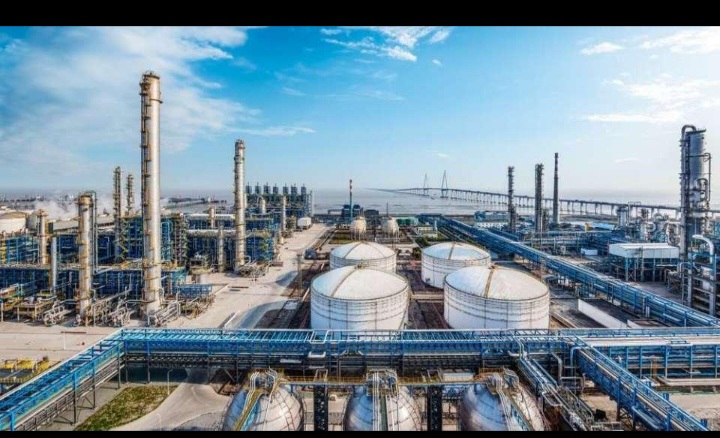
Nigeria’s $1.6 billion refinery share offering has highlighted the difficulties of connecting African investors to major businesses across national borders, despite growing calls for deeper regional financial integration.
A landmark energy investment raises wider questions
The public share offering of Nigeria’s Dangote Petroleum Refinery has put Africa’s fragmented investment markets under scrutiny, raising questions about how easily investors in one African country can participate in major industrial opportunities in another.
The $1.6 billion offering was presented as an opportunity for investors to acquire a stake in one of Africa’s most significant industrial developments. However, differences in national securities regulations and access to investment platforms have complicated participation for investors outside Nigeria.
Reuters reported on 9 October that the offering’s registration in Nigeria created obstacles for investors in other African markets, highlighting the challenges of expanding investment beyond national borders.
Kenya has since established a regulated route for local participation through a proposed Global Depositary Receipt (GDR) programme. The Capital Markets Authority approved a short-form prospectus for the arrangement on 5 October, allowing eligible Kenyan investors to participate through a financial instrument intended for listing on the Nairobi Securities Exchange, subject to further requirements.
The development demonstrates both the obstacles and the potential solutions facing cross-border investment in Africa.
Why the Dangote refinery matters
Located in the Lekki area of Lagos, the Dangote refinery represents a major investment in Africa’s energy and industrial capacity.
Large-scale domestic refining can help expand the supply of petroleum products, support industrial activity and strengthen links between energy production, manufacturing and distribution.
The project also illustrates how African businesses can mobilise substantial capital to develop infrastructure with implications for markets beyond their home countries.
Opening ownership to public investors introduces another dimension: the opportunity for individuals and institutions to participate in the financial performance of a major African industrial enterprise.
However, making an offering available to investors across several countries requires more than investor interest. It also involves securities regulation, authorised intermediaries, settlement arrangements and compliance with each relevant market’s rules.
Kenya’s route into the offering
Kenya’s approved GDR arrangement offers an example of how financial institutions can create a route for cross-border participation.
A Global Depositary Receipt is a financial instrument representing shares in a company that can be made available to investors through another market, subject to the applicable legal and regulatory framework.
The proposed Nairobi arrangement is intended to give eligible Kenyan investors access to the Nigerian refinery offering without requiring them to purchase the underlying shares directly through Nigeria’s domestic market.
Nevertheless, participation conditions matter. Reports indicate that the minimum investment through the Kenyan route is substantially higher than the minimum subscription in Nigeria, potentially limiting access for smaller retail investors.
The approval of a prospectus should also not be confused with the completion of a stock exchange listing. Further regulatory and transaction steps may still be required.
The Kenyan example therefore highlights the importance of both market access and affordability when designing cross-border investment opportunities.
The wider challenge facing African capital markets
Africa has multiple stock exchanges and national financial regulatory systems. Although these markets serve important domestic functions, differences between them can make regional investment more complicated.
Investors may encounter separate account requirements, currency-conversion costs, brokerage restrictions, settlement procedures and disclosure rules when attempting to purchase securities outside their home countries.
For businesses seeking capital, these obstacles can restrict access to potential investors and increase the complexity of fundraising across the continent.
More effective cooperation between regulators, exchanges, custodians and financial intermediaries could help reduce unnecessary barriers while preserving appropriate investor protections.
Improved regional market connections could also give investors more opportunities to diversify their holdings and enable businesses to reach a wider pool of capital.
Why this matters for energy and infrastructure
The issue extends beyond the refinery sector. African economies need substantial investment in electricity generation, transmission networks, ports, transport corridors, telecommunications and data centres.
These projects often require significant upfront capital and long investment horizons. Developers may therefore need funding from a combination of commercial banks, institutional investors, development finance institutions and equity markets.
If African investors can access eligible investment opportunities across borders more efficiently, regional capital markets could become a more useful source of funding for productive infrastructure.
For example, a project serving several neighbouring countries may benefit from access to investors in each of those markets rather than relying primarily on capital available within the host country.
However, better market access alone will not guarantee financing. Projects must still demonstrate commercial viability, sound governance, manageable risks and clear benefits for investors and host economies.
The role of regional financial integration
The African Continental Free Trade Area aims to deepen economic integration and expand trade across the continent. Achieving broader integration also requires financial systems capable of supporting businesses and investors operating across national boundaries.
Possible areas for progress include closer regulatory cooperation, more compatible securities-market rules, improved settlement infrastructure and clearer procedures for cross-border offerings.
Such reforms could help African businesses mobilise domestic and regional savings for industrial development.
They would also need to maintain safeguards against fraud, inadequate disclosure and other financial risks. A more integrated market should make legitimate investment easier without weakening investor protection.
What comes next?
The Dangote refinery offering highlights a broader question for African economic development: how can the continent make it easier for its own investors to finance its own businesses?
The Kenyan GDR route demonstrates a practical attempt to widen access, while also showing that regulatory approval, affordability and final listing arrangements remain important considerations.
For Africa’s energy and industrial sectors, stronger connections between capital markets could help broaden the sources of funding available for major projects.
The longer-term opportunity is to build a financial environment in which viable African businesses can attract capital from across the continent, supporting industrial capacity, infrastructure development and economic growth.
Sources: Reuters, 9 October 2026; Kenya’s Capital Markets Authority, approval of the Dangote Refinery GDR short-form prospectus, 5 October 2026.